

The Essential Guide to the Role of Remote Teams
Nearly 70 percent of companies now rely on remote teams to tackle critical projects and daily operations. For many professionals, this shift means navigating a world where teamwork happens through screens instead of conference rooms. Remote collaboration raises fresh questions about productivity, communication, and trust. This guide brings clarity by revealing key truths, exposing common myths, and outlining what makes virtual teams work in today’s dynamic workplace.
Table of Contents
- Defining Remote Teams And Common Misconceptions
- Types Of Remote Teams In Modern Workplaces
- Key Benefits And Operational Characteristics
- Challenges In Managing Distributed Teams
- Best Practices For Building Effective Remote Teams
Key Takeaways
| Point | Details |
|---|---|
| Understanding Remote Teams | Remote teams thrive on clear communication, technological infrastructure, and intentional relationship-building, challenging misconceptions about their effectiveness. |
| Types of Remote Teams | Organizations can choose from various remote team configurations, ensuring alignment with specific project goals and team dynamics. |
| Benefits of Remote Work | Remote teams provide significant advantages such as cost efficiency, flexible work arrangements, and access to a broader talent pool. |
| Effective Management Practices | Successful remote team management requires strategic approaches, including clear protocols, robust technology, and fostering trust among members. |
Defining Remote Teams and Common Misconceptions
A remote team represents a group of professionals who collaborate and complete work projects without sharing a physical workspace, leveraging digital communication technologies to connect across different locations. According to research from Sciendo, these virtual teams have unique operational dynamics that distinguish them from traditional workplace configurations.
Understanding remote teams requires dispelling several prevalent misconceptions. Many professionals incorrectly assume that virtual teams are inherently less productive or challenging to manage. As explored by Wikipedia, these teams can be equally effective when equipped with proper communication strategies and management techniques. Key differentiators include:
- Advanced technological infrastructure
- Clear communication protocols
- Strong digital collaboration tools
- Robust performance tracking mechanisms
The fundamental challenge for remote teams lies not in their structure, but in developing trust and seamless interaction across geographic boundaries. Successful virtual teams invest significant effort in creating robust communication channels, establishing transparent workflows, and maintaining consistent engagement. Unlike traditional office environments, remote teams must be intentional about building relationships, sharing context, and maintaining team cohesion through digital platforms.
Professionals transitioning to or managing remote teams should recognise that effectiveness stems from strategic implementation, not physical proximity. By understanding these nuanced dynamics, organisations can unlock the substantial potential of distributed workforce models, transforming geographical separation from a limitation into a strategic advantage.

Types of Remote Teams in Modern Workplaces
Remote teams have evolved into diverse configurations that address different organisational needs and strategic objectives. According to Wikipedia, modern workplaces feature multiple types of virtual teams, each designed to serve unique functional requirements. These configurations range from project-specific groups to long-term collaborative networks.
The primary categories of remote teams include:
- Networked Teams: Professionals connected across multiple organisational boundaries
- Parallel Teams: Groups working simultaneously on complementary project components
- Project Development Teams: Collaborative units focused on specific strategic initiatives
- Service Teams: Customer-facing groups providing remote support and solutions
- Global Virtual Teams: Internationally distributed workforce collaborating across different time zones
As outlined by GitLab, organisations can adopt various remote work models, from fully distributed teams to hybrid arrangements. The selection depends on factors like industry, technological infrastructure, team dynamics, and specific project requirements. Successful implementation requires thoughtful design of communication protocols, performance management systems, and cultural alignment.
Understanding these remote team typologies allows businesses to strategically structure their workforce, balancing flexibility with productivity. By recognising the nuanced differences between team models, organisations can create tailored approaches that leverage digital collaboration technologies and global talent pools.
Find remote job opportunities that match these innovative team structures and explore the future of work.
Key Benefits and Operational Characteristics
Remote teams offer transformative advantages that extend far beyond traditional workplace models. According to Wikipedia, these innovative work arrangements provide significant benefits including reduced overhead costs, enhanced flexibility, and access to a global talent pool. The operational characteristics of remote teams fundamentally reshape how organisations approach productivity and collaboration.
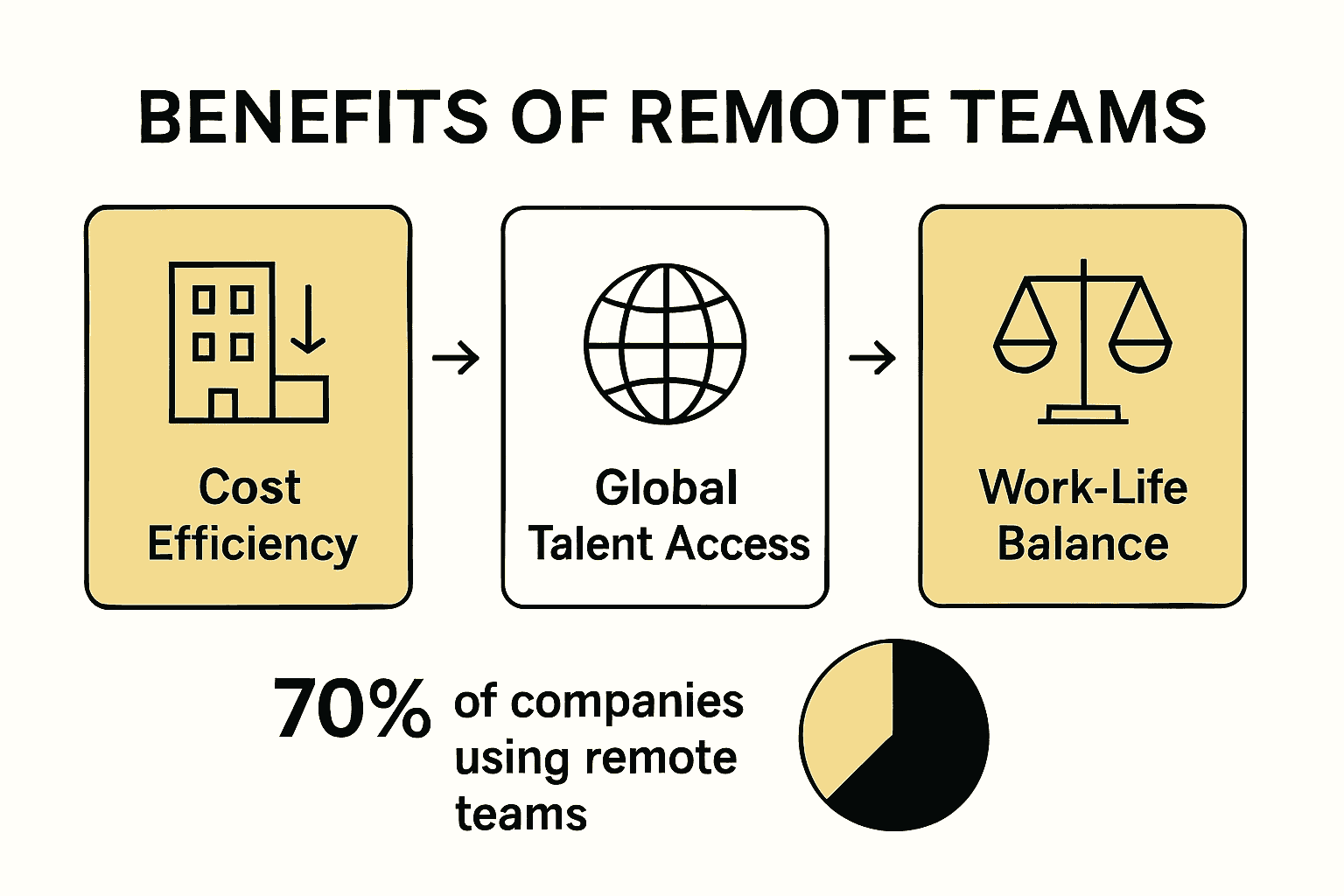
The key benefits of remote teams can be categorised into several critical dimensions:
- Cost Efficiency: Dramatically reduced workplace infrastructure expenses
- Talent Acquisition: Ability to recruit top professionals regardless of geographic limitations
- Workforce Flexibility: Employees can work from preferred locations and optimise personal productivity
- Work-Life Balance: Greater control over personal and professional schedules
- Operational Resilience: Reduced dependency on physical office environments
Virtual collaboration research highlights the sophisticated communication methods that enable these teams to function effectively. Modern remote teams leverage both synchronous and asynchronous communication technologies, allowing seamless interaction across different time zones and work environments. This approach enables continuous productivity, breaking traditional constraints of physical workspace interactions.
Successful remote teams prioritise robust digital infrastructure, clear communication protocols, and performance tracking mechanisms. By embracing these operational characteristics, organisations can create dynamic, adaptable workforce models that prioritise outcomes over physical presence. Find remote job opportunities that demonstrate these innovative working principles and explore the future of professional collaboration.
Challenges in Managing Distributed Teams
Managing distributed teams presents complex operational challenges that require strategic approaches and sophisticated leadership techniques. Research from arXiv reveals significant hurdles in remote team management, particularly around coordination difficulties and communication barriers that can dramatically impact team performance and job satisfaction.
The most prominent challenges in distributed team management include:
- Communication Gaps: Reduced spontaneous interactions and contextual understanding
- Trust Building: Limited opportunities for informal relationship development
- Performance Monitoring: Increased complexity in tracking individual contributions
- Knowledge Sharing: Difficulties transferring tacit and informal organizational knowledge
- Cultural Synchronization: Navigating diverse working styles and expectations
According to arXiv, distributed teams face substantial innovation constraints, particularly in generating breakthrough ideas. The research indicates that physical separation can impede the subtle knowledge exchange and conceptual collaboration necessary for transformative problem-solving. Successful teams must intentionally create structured communication channels, implement robust digital collaboration tools, and develop explicit knowledge-sharing protocols.
Overcoming these challenges requires a proactive, technology-enabled approach to team management. Leaders must invest in building strong digital communication infrastructures, establishing clear performance metrics, and cultivating a culture of transparency and trust. Find remote job opportunities that demonstrate advanced distributed team management practices and explore strategies for effective virtual collaboration.
Best Practices for Building Effective Remote Teams
Building successful remote teams requires a deliberate and strategic approach that transcends traditional workplace management techniques. Research from arXiv emphasizes the critical importance of adaptive work environments that accommodate individual preferences and collaboration styles, recognising that one-size-fits-all solutions rarely succeed in distributed team settings.
Key best practices for developing high-performing remote teams include:
- Clear Communication Protocols: Establishing structured communication channels
- Technology Infrastructure: Investing in robust collaborative digital tools
- Performance Measurement: Defining transparent, outcome-based evaluation metrics
- Cultural Sensitivity: Recognising and respecting diverse working styles
- Regular Virtual Interactions: Scheduling consistent team engagement opportunities
According to IJARSCT, managing international remote teams demands nuanced strategies that prioritize cultural understanding and technological integration. Successful teams develop explicit knowledge-sharing mechanisms, create opportunities for informal interactions, and implement flexible collaboration frameworks that transcend geographic and cultural boundaries.
Ultimately, effective remote teams are built on trust, mutual respect, and a shared commitment to collective goals. Leaders must continuously invest in team development, providing professional growth opportunities, maintaining transparent communication, and fostering a sense of belonging despite physical separation. Find remote job opportunities that demonstrate these advanced team-building principles and explore the future of collaborative work.
Unlock the Full Potential of Remote Teams With Tailored Opportunities
Navigating the complexities of remote teams requires more than just understanding the challenges such as communication gaps, trust building, and performance monitoring. You need access to roles that embrace advanced digital collaboration, value diversity, and support flexible work models. If you are seeking to thrive in a remote environment or lead distributed teams successfully, it is essential to connect with employers who prioritise these exact needs.
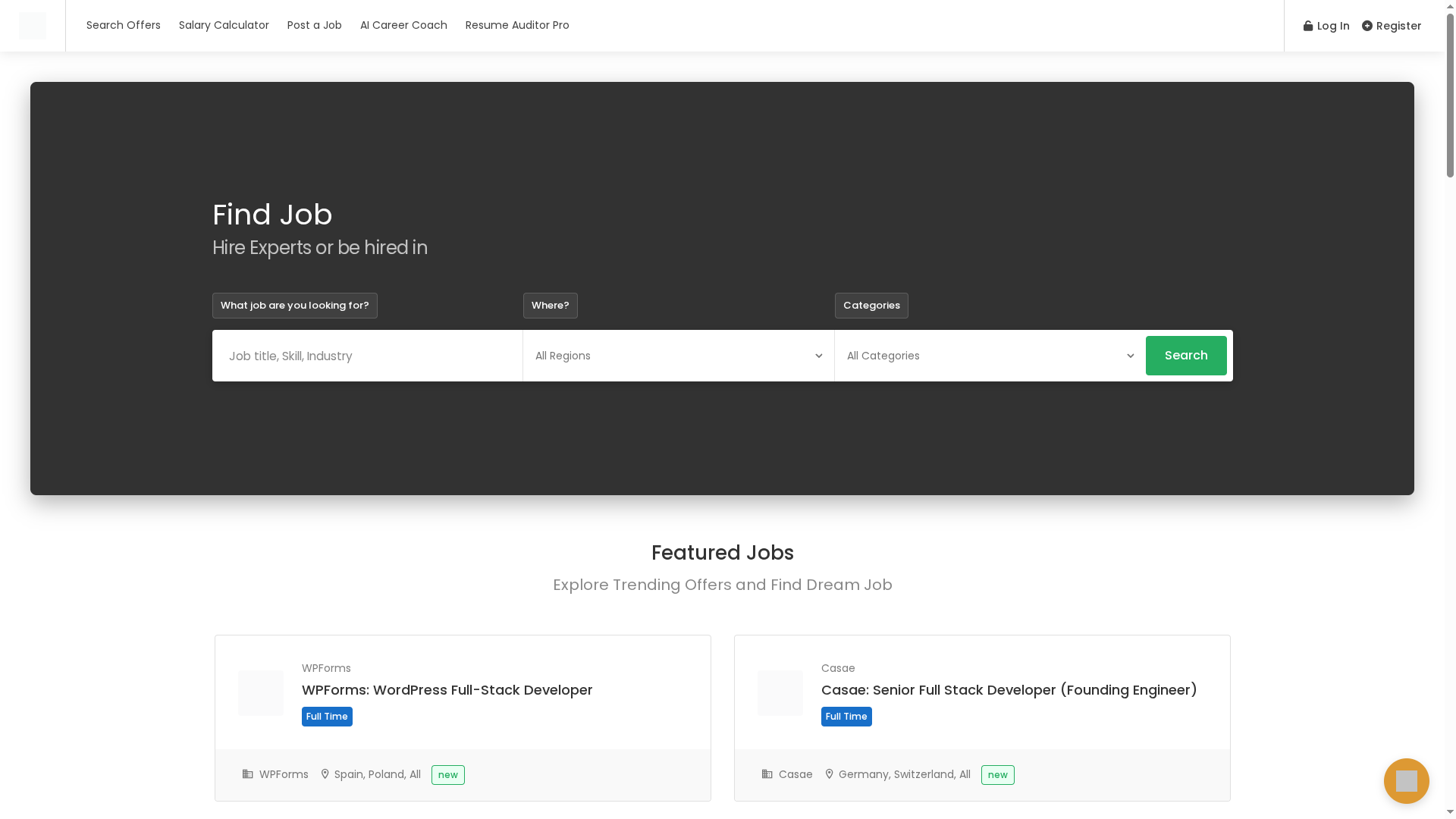
Discover a wealth of remote job opportunities that align with modern virtual team structures on gonextjob.com. Whether you want to find positions that offer global collaboration or roles that allow you to work from your preferred location, our platform offers tailored search tools and employer profiles designed to put you ahead. Start building your remote career now and take control of your work-life balance by finding your next role at gonextjob.com. Enhance your job search experience by visiting Find remote job opportunities and step confidently into the future of work.
Frequently Asked Questions
What is a remote team?
A remote team is a group of professionals who collaborate on work projects without sharing a physical workspace, using digital communication technologies to connect across different locations.
What are the main benefits of remote teams?
Remote teams offer benefits such as cost efficiency, access to a global talent pool, increased flexibility for employees, improved work-life balance, and operational resilience without reliance on physical offices.
What are some common challenges faced by remote teams?
Common challenges include communication gaps, difficulties in trust building, performance monitoring complexities, knowledge sharing issues, and the need for cultural synchronization among diverse team members.
What best practices can help in building effective remote teams?
Best practices for building effective remote teams include establishing clear communication protocols, investing in technology infrastructure, defining transparent performance measurement metrics, ensuring cultural sensitivity, and scheduling regular virtual interactions.